






The Role of Linear Motor Modules in Advanced Manufacturing Techniques
2026-03-17
The Role of Linear Motor Modules in Advanced Manufacturing Techniques
Table of Contents
1. Introduction to Linear Motor Modules
2. Understanding Advanced Manufacturing Techniques
3. The Mechanics of Linear Motors
4. Advantages of Linear Motor Modules in Manufacturing
4.1 Enhanced Precision and Accuracy
4.2 Increased Speed and Efficiency
4.3 Reduced Maintenance Requirements
5. Applications of Linear Motor Modules in Manufacturing
5.1 Automotive Industry
5.2 Electronics Manufacturing
5.3 Aerospace Sector
6. Future Trends in Linear Motor Technology
7. Challenges and Considerations
8. Frequently Asked Questions (FAQs)
9. Conclusion
1. Introduction to Linear Motor Modules
Linear motor modules are integral components in the evolution of manufacturing technologies. They provide direct drive motion without the need for gears or belts, allowing for unprecedented levels of precision and speed. These systems utilize electromagnetic forces to create linear motion, making them a staple in various high-tech applications. In this article, we will explore how these modules impact advanced manufacturing techniques, their applications, and their future.
2. Understanding Advanced Manufacturing Techniques
Advanced manufacturing refers to the use of innovative technologies and processes to improve products and processes in the manufacturing sector. It encompasses a broad spectrum of methodologies, including automation, data exchange, and smart manufacturing. Linear motor modules play a pivotal role in enhancing these techniques by providing reliability and efficiency in production lines.
3. The Mechanics of Linear Motors
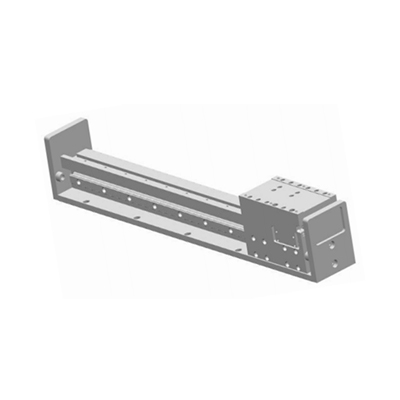
Linear motors operate on the principle of electromagnetic induction. Unlike traditional motors, which rotate, linear motors produce linear motion directly. They consist of a stator and a moving coil or armature, where the interaction between magnetic fields generates movement. The simplicity of this design leads to low friction and wear, making linear motors ideal for high-speed applications.
4. Advantages of Linear Motor Modules in Manufacturing
The adoption of linear motor modules in manufacturing processes brings several significant advantages:
4.1 Enhanced Precision and Accuracy
One of the most compelling benefits of using linear motor modules is their ability to deliver exceptional precision. The direct drive mechanism eliminates backlash and mechanical play, resulting in highly accurate positioning. This level of precision is crucial in industries where minute tolerances are critical, such as electronics and aerospace.
4.2 Increased Speed and Efficiency
Linear motors can achieve higher speeds compared to traditional motors. Their design allows for rapid acceleration and deceleration, significantly reducing cycle times in manufacturing processes. This speed translates directly into increased productivity, allowing manufacturers to meet growing demands without compromising quality.
4.3 Reduced Maintenance Requirements
The absence of gears and belts in linear motor modules leads to lower maintenance needs. Traditional mechanical systems often suffer from wear and tear, requiring frequent adjustments and replacements. In contrast, linear motors have fewer moving parts, resulting in a more reliable operation and reduced downtime for maintenance.
5. Applications of Linear Motor Modules in Manufacturing
Linear motor modules find applications across various manufacturing sectors, demonstrating their versatility and effectiveness.
5.1 Automotive Industry
In the automotive sector, linear motors are used in robotics for assembly lines, particularly in tasks that require high precision, such as welding and painting. Their rapid movement capabilities enhance automation processes, reducing production times while maintaining quality.
5.2 Electronics Manufacturing
The electronics industry benefits significantly from linear motor technology. Automated assembly machines utilizing linear motors can place components on circuit boards with extreme accuracy, crucial for modern electronic devices that demand high precision and miniaturization.
5.3 Aerospace Sector
In aerospace manufacturing, where safety and precision are paramount, linear motor modules facilitate the assembly of complex components. Their ability to operate in rigorous conditions with high accuracy makes them suitable for applications such as composite material handling and assembly.
6. Future Trends in Linear Motor Technology
As technology advances, the capabilities of linear motor modules continue to evolve. Future trends may include increased integration with artificial intelligence (AI) and the Internet of Things (IoT), enabling smarter manufacturing systems. Enhanced feedback systems and improved energy efficiency are also on the horizon, further solidifying the role of linear motors in advanced manufacturing.
7. Challenges and Considerations
Despite their advantages, the implementation of linear motor modules does present challenges. The initial investment can be substantial, requiring careful consideration of the cost-benefit analysis. Additionally, the need for specialized knowledge to integrate these systems into existing production lines may pose a hurdle for some manufacturers.
8. Frequently Asked Questions (FAQs)
1. What are linear motor modules?
Linear motor modules are devices that utilize electromagnetic forces to create direct linear motion, eliminating the need for gears or belts.
2. What industries benefit from linear motor technology?
Industries such as automotive, electronics, and aerospace leverage linear motor technology for its precision, speed, and efficiency.
3. How do linear motors improve manufacturing efficiency?
Linear motors enhance manufacturing efficiency by providing faster acceleration and deceleration, reducing cycle times and increasing productivity.
4. Are linear motors maintenance-free?
While linear motors require less maintenance than traditional systems, they are not entirely maintenance-free. Regular inspections are recommended to ensure optimal performance.
5. What are the future prospects for linear motor technology?
The future of linear motor technology includes advancements in AI integration, IoT capabilities, and energy efficiency improvements, paving the way for smarter manufacturing processes.
9. Conclusion
In conclusion, linear motor modules are transforming advanced manufacturing techniques through their precision, speed, and efficiency. As industries continue to seek innovative solutions to enhance production processes, the adoption of linear motors will undoubtedly play a central role. Their applications across various sectors demonstrate their versatility and importance in modern manufacturing. Embracing this technology is not just about keeping pace with industry trends but also about investing in a future that prioritizes efficiency and quality in manufacturing.
← Prev Post

Industrial Linear Motion Solution
Got questions? – get in touch